Mentioned By Related Umas
4 profiles

AI generated draft

This profile was created using UmaArchive's AI-assisted research pipeline and is awaiting editorial review. It may be updated or expanded before becoming a fully reviewed archive entry.
Facts and copy here come from the latest saved research bundle. Database fields, images, and wording can still change during admin review.
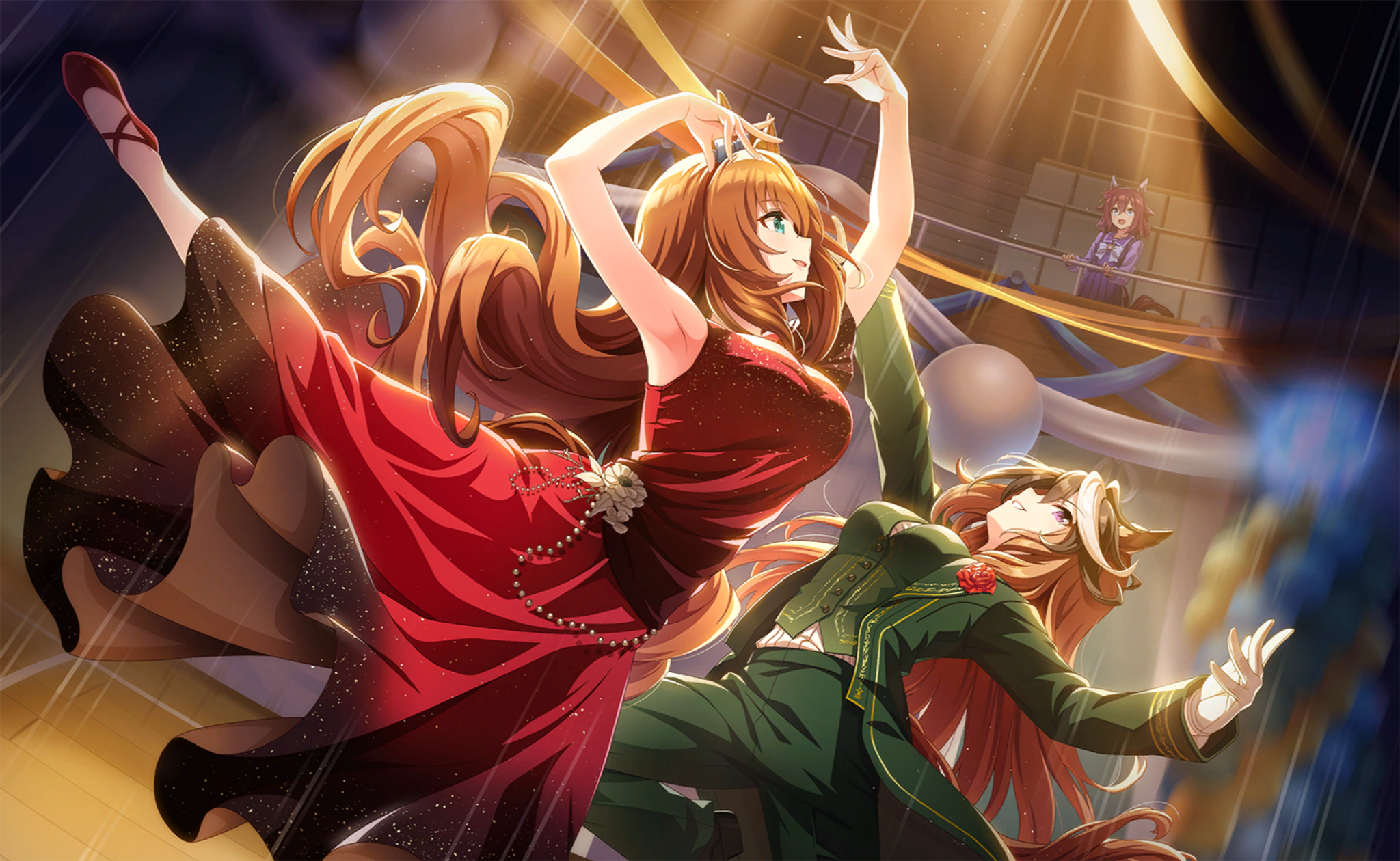
Maruzensky is the kind of Uma Musume who arrives already in motion: bright, stylish, and unapologetically flashy. Her official tagline says it best—“Keeping it old-school! A real hot rod!”—and nearly everything about her presentation leans into that glamorous, retro speed-demon charm. She greets the world with easy confidence, introduces herself like a star, and cheerfully assumes you came to see her. It suits her. Maruzensky is built to make an entrance.
That confidence never feels cold, though. She calls herself Atashi and even Onee-san—“big sis”—which gives her a teasing, familiar warmth beneath the polish. Her Trainer is “Trainer-kun” or “Trainer-chan,” a playful choice that matches her breezy self-introduction and slightly mischievous air. Voiced by Lynn, she comes across as lively and self-assured, the sort of racer who can be glamorous and approachable at the same time.
Her character details sharpen that image in wonderfully specific ways. Maruzensky’s stated strong point is drifting, while her weak point is, fittingly, leisurely drives; she sounds like someone who was simply not made to take the slow lane. Eurobeat makes her ears want to boogie, her favorite part of the day is getting her tail silky with a morning shower, and the bright red sports car she treasures is a hand-me-down from her dad. Even her little secret fits the theme with a wink: she gets carsick when she’s the passenger. For a girl defined by speed, being out of the driver’s seat is apparently the real problem.
There is a lovely period flavor to Maruzensky as well. Her old-fashioned slang reflects the fact that her real-life namesake raced in the 1970s, giving her speech and whole aesthetic a deliberate throwback flair. She feels like a classic machine with the engine still roaring—beautifully maintained, a little theatrical, and impossible to ignore. At 164 cm and in “optimal form,” she projects both elegance and power, the kind of presence that makes “Monster” feel less like a warning and more like a legend.
A few quick profile notes:
Touch fallback
MaruzenskyTouch and smaller layouts use grouped connection cards instead of the live radar. Open any entry to follow the relationship directly.
4 profiles
1 profile
Maruzensky was one of the standout Japanese colts of the 1970s: a bay stallion foaled on 19 May 1974, owned and bred by Z. Hashimoto and trained by S. Hongo. By Nijinsky out of Shill, a Buckpasser mare, he carried an international pedigree topped by Northern Dancer through his sire line, and he quickly matched that pedigree with exceptional ability on the track.
His racing career was brief but flawless. Maruzensky retired undefeated, winning all 8 of his starts for a perfect 8:8-0-0 record. Contemporary form evidence in the saved research points to his speed and attacking style, including a front-running profile and a listed win in the 1200-metre Nihon Tampa Sho on 24 July 1977. His most important recorded top-level success was the 1976 Asahi Hai Sansai Stakes, a victory that helped define him as one of the best juveniles of his generation.
Part of Maruzensky's historical intrigue lies in what he was unable to attempt. Despite his brilliance, he was excluded from the Japanese Triple Crown classics because he had been foaled too early in the year under the rules then in force. That circumstance has long shaped his reputation: an unbeaten horse whose record was already remarkable, yet whose full ceiling in the classics was never tested on the racecourse.
Even so, his influence extended well beyond those 8 starts. At stud, Maruzensky became a major sire, producing 998 progeny credited with 775 JRA wins. His offspring included 21 JRA graded stakes winners and 3 JRA Grade 1 winners, giving him an enduring place in Japanese breeding as well as racing history. The depth of his family also included siblings such as Maruzen Rosca, Mogami Tholon, and Maruzen Quill.
Maruzensky died on 21 August 1997, but his legacy rests securely on two fronts: as an undefeated racehorse of uncommon promise, and as a stallion who transmitted quality to a large and successful body of runners. Few horses leave behind both a perfect race record and a substantial stud influence; Maruzensky did.
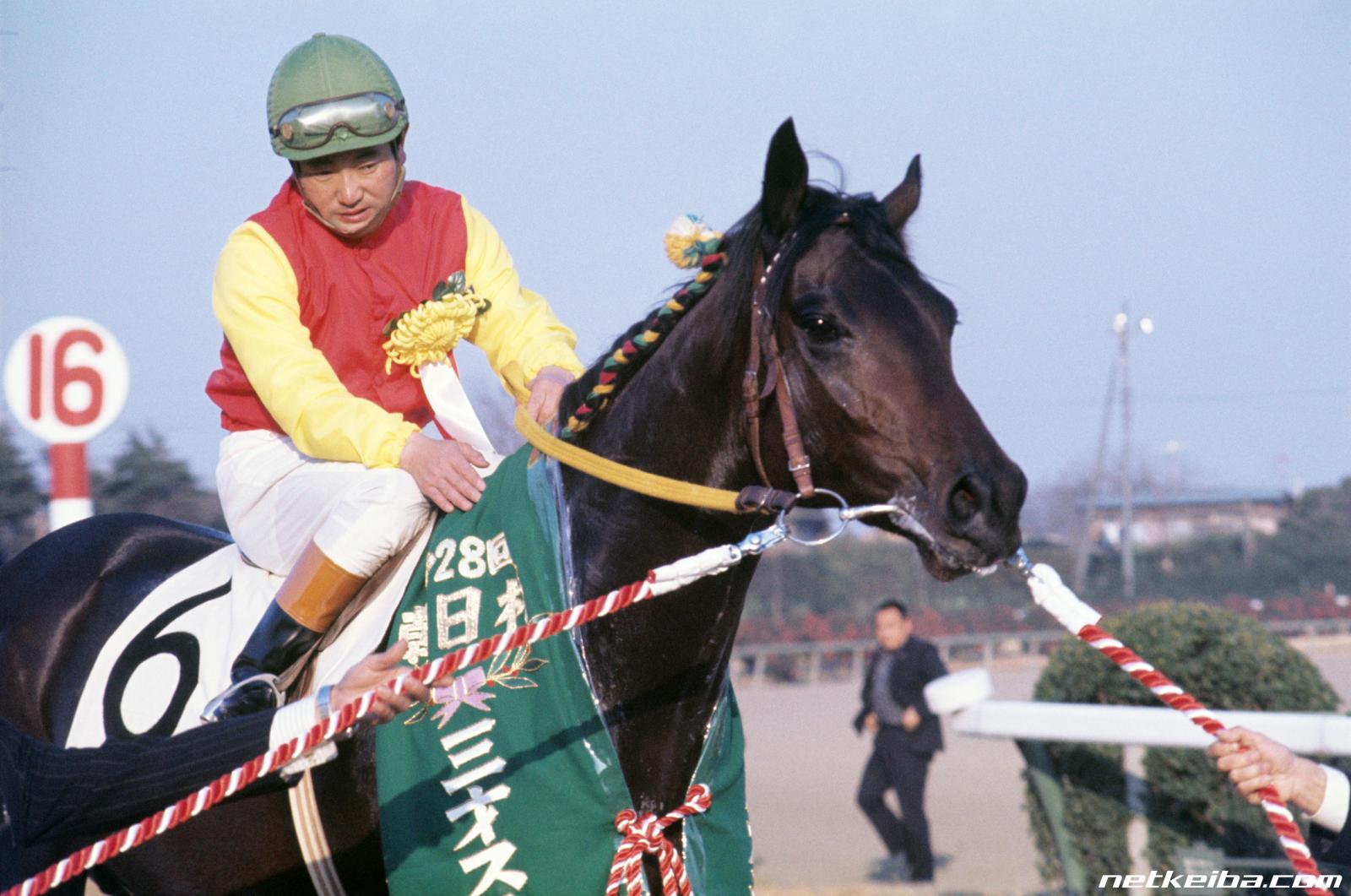
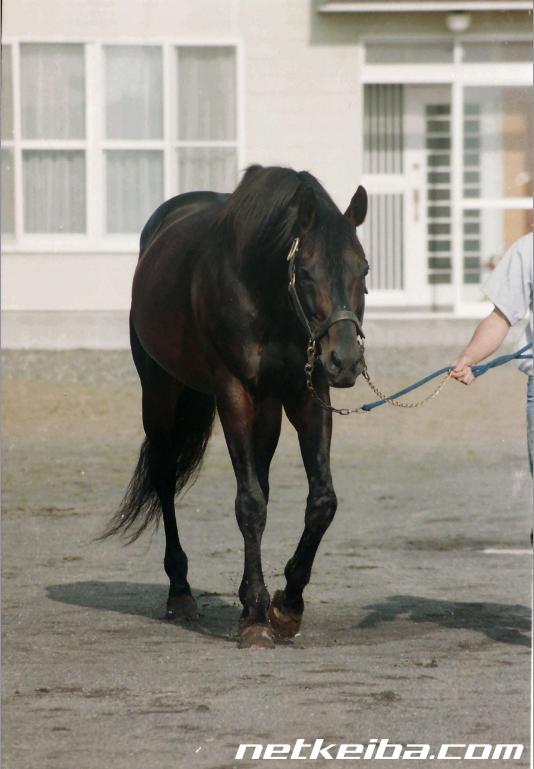
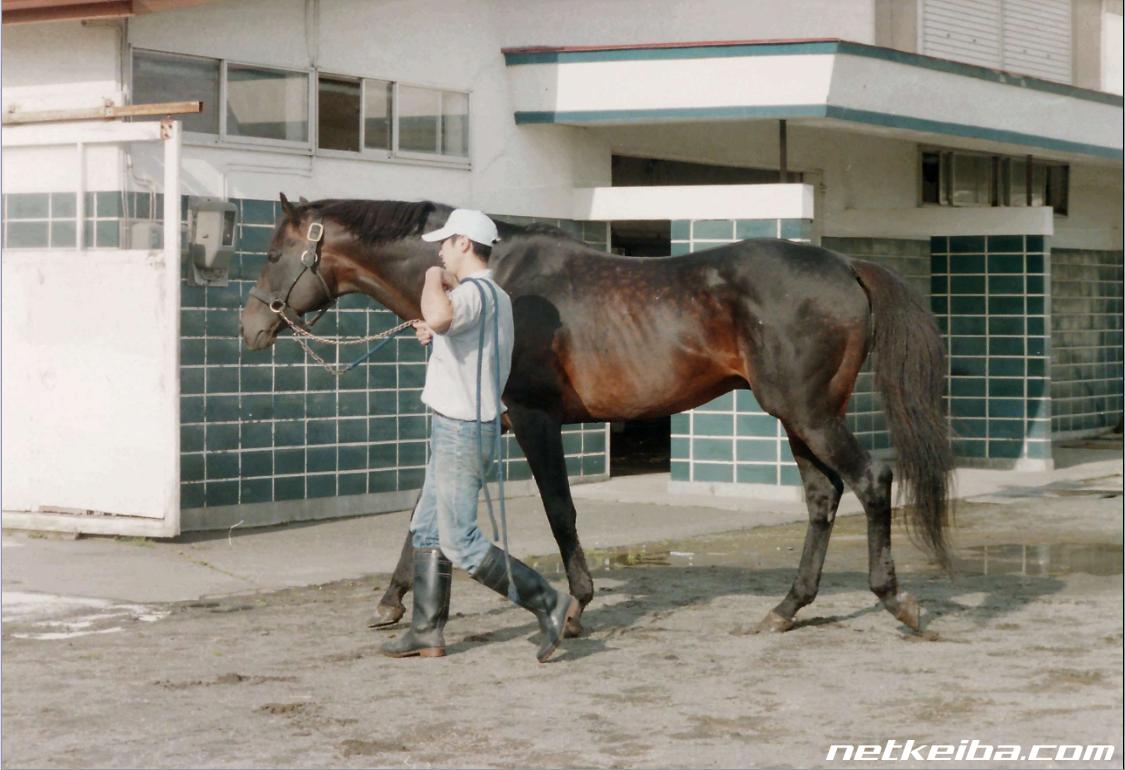
Tagged archive appearances and discovered media already linked to this draft.













| Date | Race | Grade | Course | Going | Dist | Pos | Draw | Jockey | Wgt | SP | Time |
|---|---|---|---|---|---|---|---|---|---|---|---|
| 1977-07-24 |
Tankyori Stakes
|
OP | Sapporo (JP) | Firm | 1200 m | 1 | 4 | Seiichi Nakanowatari | 54.0 kg | 1.6 | R1:10.1 |
| 1977-06-26 |
Nihon Tampa Sho
|
OP | Nakayama (JP) | Heavy | 1800 m | 1 | 2 | Seiichi Nakanowatari | 58.0 kg | 1.2 | 1:51.4 |
| 1977-05-07 |
Four Year Old
|
OPEN | Tokyo (JP) | Firm | 1600 m | 1 | 4 | Seiichi Nakanowatari | 57.0 kg | 1.6 | 1:36.3 |
| 1977-01-22 |
Four Year Old
|
OPEN | Chukyo (JP) | Firm | 1600 m | 1 | 2 | Seiichi Nakanowatari | - | 1.3 | 1:36.4 |
| 1976-12-12 |
Asahi Hai Sansai Stakes
|
OP | Nakayama (JP) | Firm | 1600 m | 1 | 6 | Seiichi Nakanowatari | - | 1.7 | R1:34.4 |
| 1976-11-21 |
Fuchu Sansai Stakes
|
OP | Tokyo (JP) | Good | 1600 m | 1 | 3 | Seiichi Nakanowatari | - | 1.4 | 1:37.9 |
| 1976-10-30 |
Icho Tokubetsu
|
Pre-OP | Nakayama (JP) | Firm | 1200 m | 1 | 1 | Seiichi Nakanowatari | - | 1.3 | 1:10.5 |
| 1976-10-09 |
Three Year Old Debut
|
Maiden | Nakayama (JP) | Firm | 1200 m | 1 | 1 | Seiichi Nakanowatari | - | 1.7 | 1:11.0 |
Citations
Imported and enriched race results from supported racing sources.